Project
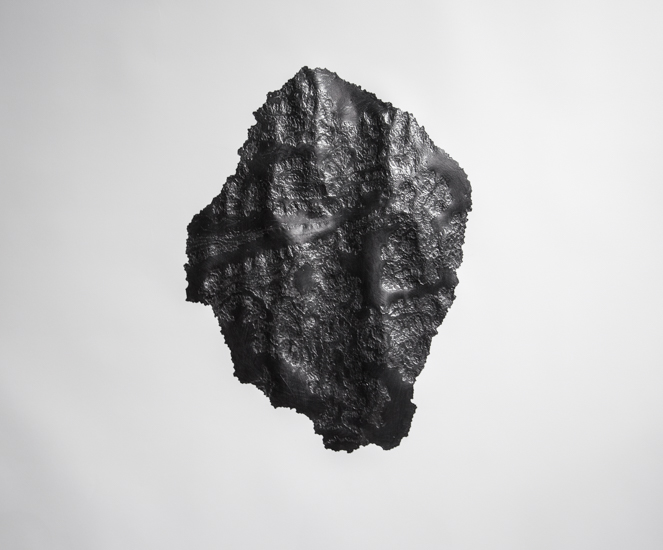
The Goodwill Moon Rock Project explores contemporary post-sculptural practice and the ways in which mineral histories blend with the geopolitics of spatial conquest and critically engaging with colonial histories. In 1973, Richard Nixon distributed moon rocks brought to earth by the Apollo 11 and 17 missions between the 50 US states and 135 countries, including Denmark. Nixon framed these gifts a symbol of ‘goodwill.’ The dispersion generated multiple narratives about imperial expansion and the conquest of space, the consolidation of power through diplomatic seduction, and the unification of mankind under the conditions of globalization. The US government’s enterprise in the 1960s and 1970s was without historical precedent—even though the conquest of the moon could be thought as somehow equivalent to the colonization of the Americas. The Apollo program however, lacked any useful definition on how to territorialize outer space. It is possible to speculate that Nixon made a pragmatic decision to capitalize on space exploration by deploying the only model of power he knew how to measure on earth: diplomatic relations. Examining the function and power of gift economies, my project outlines a topography of the moon rocks that interprets the overdetermined meanings accumulated around Nixon’s gesture. GMRP is anchored in the presumption that this collection of the rocks can subvert power concentrations and oppose the colonial process undertaken by the Nixon administration. The point of departure for the project is a journey around the contour of the dispersion of the Moon fragments. This journey is inversely equivalent to Nixon’s colonial ambition; I traverse the surface of the Moon rocks to construct a speculative fiction that subverts the US Government’s power gesture. This counter-cartographic project maps the dispersion of the Moon on the Earth using a research-creation process that collects, examines and redeploys images, videos, text, interviews, and archival material relevant to the rocks and Nixon gesture to imagine alternate histories and futures. |