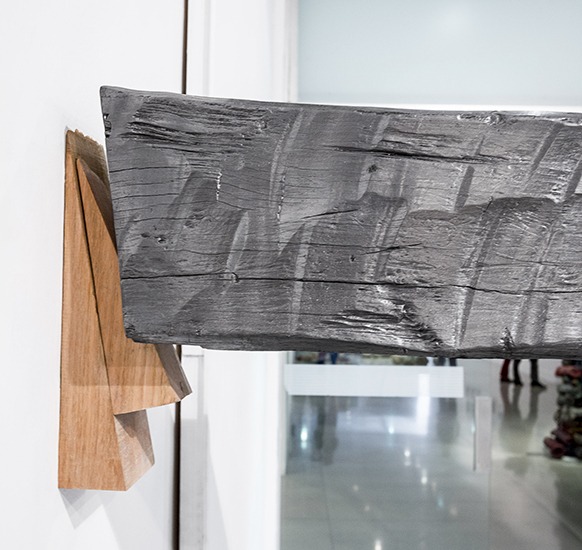
semi-structuresWhen a building or a structure is in the process of construction, it is in a state of transience or precariousness. The elements are not in their final position, in most cases they exist as components that are essential for the building process, but which are not part of the structure. The scene is characterized by a state of equivalence: all the elements are meaningful for the process, because they could be part of the final structure and are also necessary tools for the construction of raw materials that do not form a part of the structural system. There is thus a conflict between their residual state and structural state. In the building process, there are some structures and assemblies that do not have a place in the final system. They only fulfil transitory missions. These objects are the product of the pragmatics and tactics required in the process of construction. Because of their transience — represented in examples such as objects made to sustain other pieces; to support the process of setting the concrete; to hang on the security tape; or simply as wedges that occupied a specific space —, there is not a manual or a unique form of production.
The construction of these elements is based on the ability or “manners” of those who know how to make them, or the capacity of acting in concordance with the logic of the place, with the correspondent utilisation of available resources. These semi structures grow up suddenly: they are manufactured with materials from the site of construction, which have a low cost or are residuals from the building process. Methodologically speaking, production employs these objects through the search for a pragmatic and efficient solution based on the specific necessities of the building process.
Their materiality does not come from an academic knowledge. On the contrary, it is the result of a familiarity with the making process, created during disciplined learning or intuitive procedures. The concerns about their building techniques — the “big knowledge” — or their refinement are demoted to a second stage. The primary objective is the efficiency in which the necessities are resolved, despite the level of sophistication or strength.
Santiago Reyes Villaveces 2013 |